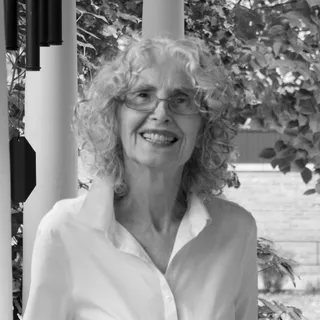
 David Summerhays
[00:00] David Summerhays: Welcome everybody. My name is David Summerhays and this is the Forging Purpose podcast. This podcast focuses on the modern crisis of meaning and like I said season one features interviews with ordinary people and also experts on the front lines of the crisis of meaning. Now today is a special bonus episode because I was re-watching my interview with Myrna and it just brought up more for me to pitch back at the question queen. I wanted to ask Myrna a few more personal questions about aging and just what’s been the most meaning full thing for her in her life over the 90 years that she’s been on this planet. So without any further ado let’s dive into that. I think you’re really gonna enjoy this.
[00:47] You were saying it’s natural for people to seek a kind of satisfaction but I was wondering if you think like objectively in other words from the point of view of let’s say the universe is it like a cold unfeeling universe that doesn’t care either way whether we find meaning or not or do you think the universe like kind of ultimately cares?
[01:05] Dr. Myrna Orenstein: David that is a interesting question that I don’t know the answer to and I can’t answer it because I don’t know and I think where my head goes is to climate change and the universe certainly cares about the change in climate and has made that known. Whether that would be meaning I think you’d have to ask someone else about that. I don’t know the universe does care about climate change. The universe doesn’t care whether we meaning or not but it does care about climate change.
David Summerhays: [02:04] Good to know. So the universe is an environmentalist. Well this has been educational already. And how do you like your I mean we’re all you could they could all be over any time but you know at age 90 it’s like it must feel so close so how do you feel about like I’m asking you about the universe does it care or not and yeah.
[02:26] Dr. Myrna Orenstein: Sure. I’ve given it a lot of thought. Here’s my wish to go to bed one night and die in the middle of the night and wake up not wake up I’m over yeah
David Summerhays: I see.
Dr. Myrna Orenstein: it as a no I’m not so much as a passage because if it’s a passage you’re going somewhere. So I read this book once called The Man Who Died by Kazantzakis and in there he’s a leader who’s been assassinated and it’s all about the train trip as he you’ve read it no okay all about the train trip as he goes through the country it’s a beautifully written book and at the end he’s being and what he said and he he’s talking to everyone and he talks about the pain of saying goodbye and how awful it is and then there’s this transition where he joins the air like a molecule and he’s euphoric that would be my wish. My gut reaction is it’s over I’ll be finished and done with and that’s the end. So no more thought no more interactions and no more pain but in the meantime it gives and that I don’t know if this is the right word balance I don’t even know what that means to if you know that an ending is near you appreciate much more what you see plants flowers nature relationships because you don’t know how long you’ve got so that’s kind of how I I see it I’m valuing what’s precious.
David Summerhays: Party time.
Dr. Myrna Orenstein: party time.
David Summerhays: [05:23] Nice, so you said you you have kind of I hope the the hereafter is like this kind of ecstatic oneness with things around you that kind of thing that’s what I understood and then your gut feeling is it’s just kind of over.
Dr. Myrna Orenstein: [05:40] no I wouldn’t call it that way I would call it not hope but pleasure in the imagination and the other is acceptance. I’ll have had my time I’m just hope I keep while I’m here first of all my cognition and secondly my ability to move speaking of like kind of what you’re hoping for but kind of transitioning there like what what sort of.
David Summerhays: [06:22] you’ve done like so many things you’ve done like you’ve written a book you’ve had a couple of careers in married had kids like what’s the most meaningful thing at 90 years old in your life.
Dr. Myrna Orenstein: [06:29] I think the most meaningful thing is first John and then my kids and not quite the intensity but close John’s kids, grandkids. Yeah, what else is meaningful and what I’ll miss when I croak is music so those you asked for the most and you wanted one but being able to perform having piano lessons with Vincent but really also the ten minutes we get of his playing that enriches my life tremendously
David Summerhays: [07:57] okay so more the relationship well first what first comes to you is the relationship side of things a lot more than like things you’ve accomplished.
Dr. Myrna Orenstein: yeah
David Summerhays: [08:09] and then yeah that’s great people you know nice but a lot of people I’m sure yeah yeah okay and then second comes to mind is yeah like kids grandkids and then you were mentioning like yeah these great moments of sort of music of
Dr. Myrna Orenstein: [08:36] yeah music and performing music in terms of like legacy so that would be yeah just that you’re you know remembered in these relationships I guess you know, I am a student at best of neuropsychoanalysis one of the things I’ve learned is genetically things get passed down from one generation to the next and I’m hoping what I’ve passed down will have meaning if you will to my kids so that’s if I’ve touched people that way and influenced them as I believe I’ve been influenced.
But a memory my father told me his history is enough to make one give up. He was orphaned by both parents at age two in Poland in an anti-semitic world lived with ultra Hasidic uncle that he hated okay? He never heard any music and when he was about four or five he was able to go to a wedding and he heard a violinist and what he did, David, is he went up and put his hand on the violin.
David Summerhays: [10:23] okay so he loves music
Dr. Myrna Orenstein: Oh man, just that’s how you know we didn’t have money but every Sunday all five of us kids would jump into my bed my mother wasn’t around and we would sing for a couple of hours we listened to the radio I could tell the difference between Yasha Haifetz and Yehudi Menuhin because Haifetz had a brilliance yeah in playing violin. Yeah.
David Summerhays: [11:04] okay gotcha
Dr. Myrna Orenstein: Oh yeah I’m sorry you don’t know who those people are cuz you’re young, you’re a baby.
David Summerhays: I also don’t play violin yeah
[11:22] So thank you again Dr. Myrna Orenstein I was re-listening to that first interview and just thinking I have a few questions left to ask her and I’m so glad I called her back and got her on the line so I could share this all with you so I’m really struck from that conversation first of all to learn that the universe is an environmentalist for Myrna I’m just joking but I thought that was a that was an interesting thought that the universe you know reacts to let’s say climate change. The world feels the consequences of our action and they have consequences back for us for other species and things like that so yeah the world isn’t just uncaring or indifferent to our actions it really does respond to us so in that our decisions really are meaningful.
[12:07] I also really like the way Myrna described pleasure for the imagination that the beliefs we have about what happens when we die they don’t have to be true they can be fun and it can put us in a good mood and in a good place yeah we’ll talk more in the second season of the forging purpose podcast about religion so we’ll be coming back a lot to this idea of afterlife and and the myths around that and things like that
[12:32] but yeah really interesting to hear Myrna’s reflections at age 90 about death which I’m sure you know it’s a subject that’s just come up a lot in her thinking but I think the most inspiring thing from this bonus episode has been just how precious things are for Myrna what I called party time just she was saying that as she ages you know every moment everything she can enjoy is worth just so much and the thought that it’s near her last or anything like that helps her really savor it a little bit more that’s really inspiring I think for any of us to take more time to savor many of the good things that are around us every day so final thank you to Myrna and we’ll see you in the next one